
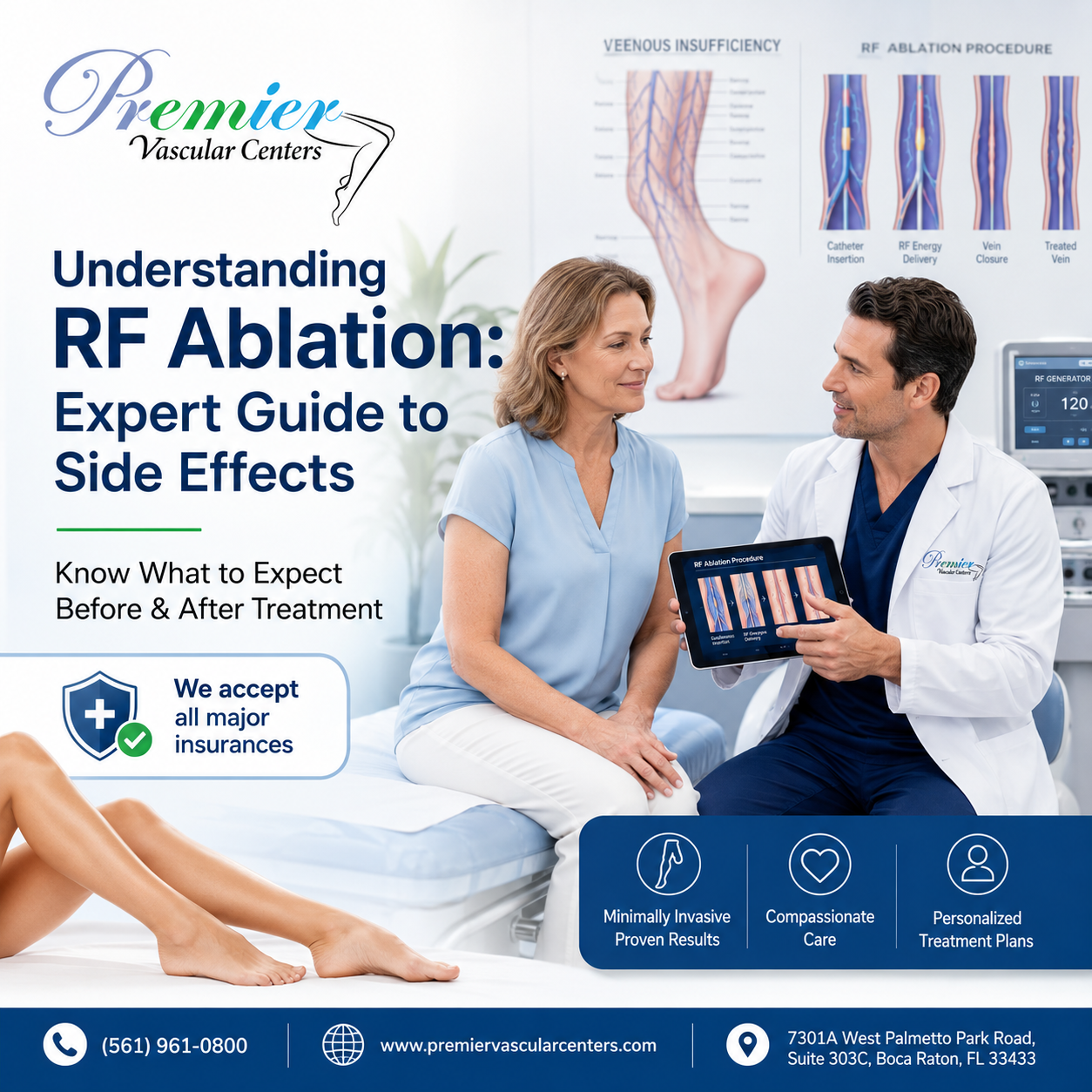
Most people do not walk into a vein clinic excited about the procedure itself. They come in because their legs hurt at the end of the day. Or because the swelling keeps getting worse. Or maybe they are tired of looking at twisted veins that seem more noticeable every year.
This is usually where the conversation starts.
Patients looking for vein specialists in Boca Raton often ask the same thing first: “What’s recovery really like?” They don’t want the polished version; they want the honest one. The question makes sense because even minimally invasive procedures can feel intimidating when you do not know what to expect.
Radiofrequency ablation, often called RF ablation, has become a common treatment for varicose veins and vein disease. It is quicker, easier, and far less invasive than older surgical methods. However, like most treatments and medications, RF also comes with a few side effects that people must be aware of for the best recovery.
Learn about the symptoms that clearly indicate that you may need RF Ablation treatment.
The First Few Days After Treatment
Most people go home the same day and are encouraged to walk shortly afterward. This may sound strange at first. People assume recovery means staying in bed and avoiding movement. But with RF ablation, gentle walking improves circulation and supports healing.
The most common side effect is soreness along the treated vein. It is not usually sharp pain. But patients often describe it more like tightness or a bruised feeling under the skin. Some say it feels like a pulled muscle. Others notice a strange tugging sensation when they stand up or stretch their leg.
This happens because the vein is closing and the body has started reacting to the treated area. It can feel unusual if you are not expecting it, but it is generally temporary.
Bruising is common, too. Sometimes it stays small near the insertion point. Other times, it travels farther down the leg than patients expect. This can look alarming the first time you see it in the mirror, especially if nobody warned you. Usually, it fades gradually over several days.
Swelling can happen as well, especially if the veins were already causing heaviness before treatment. For some patients, the leg feels slightly tighter during the first week before things begin settling down.
None of this sounds glamorous, but honesty helps patients recover with less anxiety.
The Side Effects People Worry About Most
There are also a few risks patients tend to search online at two in the morning after their procedure. This usually makes everything sound worse than it is.
One example is numbness or tingling. Temporary nerve irritation can happen because veins and nerves sit close together in some areas of the leg. Most of the time, the sensation improves gradually without becoming permanent.
Redness around the treated area can also happen. Sometimes the skin feels warm or irritated for a short period afterward. Modern ultrasound-guided treatment has reduced this risk significantly because specialists can see exactly where the catheter is going during the procedure. This precision matters more than people realize.
Then there is DVT, or deep vein thrombosis. This is the complication most patients hear about first because anything involving blood clots sounds frightening. The important thing is context. It is considered uncommon, especially when patients follow post-procedure instructions carefully. Walking, wearing compression stockings, staying hydrated, and attending follow-up visits all help reduce the risk.
A good clinic will explain these risks without trying to scare people or dismiss their concerns. That balance matters.
Why Experience Changes the Whole Process
One thing patients do not always realize is how much the clinic itself affects the experience. RF ablation may sound straightforward. But there is a major difference between a rushed procedure and one built around careful planning.
The process must begin with ultrasound mapping. The scan helps identify which veins are actually causing the problem. Without it, treatment becomes guesswork.
At Premier Vascular Centers, our professional vein specialists focus on ultrasound-guided procedures and individualized care plans. We understand that not every visible vein is the real issue. Sometimes the painful vein you see is only part of the picture. So we treat the underlying source correctly to improve long-term results. And we also accept all major insurances, so that everyone gets access to our treatments.
This is also why many patients end up feeling calmer after speaking with an experienced specialist. Clear explanations reduce fear. When somebody takes the time to explain why the leg feels sore or why compression stockings matter or what side effects you might experience, recovery feels much less overwhelming.
Explore Cutting-Edge Vein Treatment Options in Premier Vascular Centers
The side effects tied to RF Ablation are usually temporary. The symptoms that bring people into the clinic in the first place are often far more frustrating. Those problems can slowly wear people down over time. That is why many patients decide the short recovery period is worth it.
At its core, RF Ablation is about improving circulation and helping people feel more comfortable in their everyday lives. It is one of the more practical cutting-edge vein treatments available because it addresses the unhealthy vein without requiring major surgery. For the right patient, it is an effective vascular health treatment with a relatively manageable recovery process.
The best next step is usually simple: get evaluated properly, ask questions, and choose a clinic that explains things clearly instead of rushing you through the process. For many patients, that conversation begins with trusted vein specialists in Boca Raton. If you think you are eligible for endovenous RF Ablation, contact us today to consult with our vein specialists.