
Ever pull your socks off at night and see deep grooves pressed into your skin, like the elastic left a permanent mark? Or press a finger into your ankle and watch the dent linger before it fills back in? That’s not just “tired legs.” That’s your body telling you something about how well your blood is flowing back up to your heart.
Most people don’t think too much of these little things. They brush it off, blaming it on age or standing all day. Moreover, they think a little swelling is harmless. But left unmanaged, it can quietly turn into something much harder to treat: a venous ulcer.
These ulcers resist treatment and linger for months. And the worst part? Apart from the pain, you have to sit and watch as a small problem spirals into something out of control. But the truth is that none of this is inevitable. You can stop it from spiralng with something as simple as compression vein therapy for legs.
The Root Cause: Why Do These Leg Sores Form?
To understand why compression works, understand what’s going wrong underneath the skin.
Your veins are built with one-way valves. They keep the blood from flowing downwards, allowing it to flow up to your heart. When those valves are healthy, blood moves efficiently in one direction.
But over years of standing, pregnancy, or simple genetics, they can stretch out and stop closing all the way. Blood starts leaking backwards and pooling in the lower leg. Doctors call this venous hypertension. It is explained as a traffic jam of blood building pressure in your calves and ankles.
This pooled blood is a slow-motion problem for your skin. Instead of fresh, oxygen-rich blood circulating normally, the tissue around your ankles gets starved of oxygen and nutrients and becomes brittle. Eventually, even a minor bump can break that compromised skin open, and because circulation is already poor, it struggles to heal. That’s how a venous ulcer forms.
Solution 1: Compression Therapy as a Preventative Shield
So, can compression therapy actually prevent venous ulcers? Yes. Medical-grade compression is, hands down, the frontline defense against this entire chain of events.
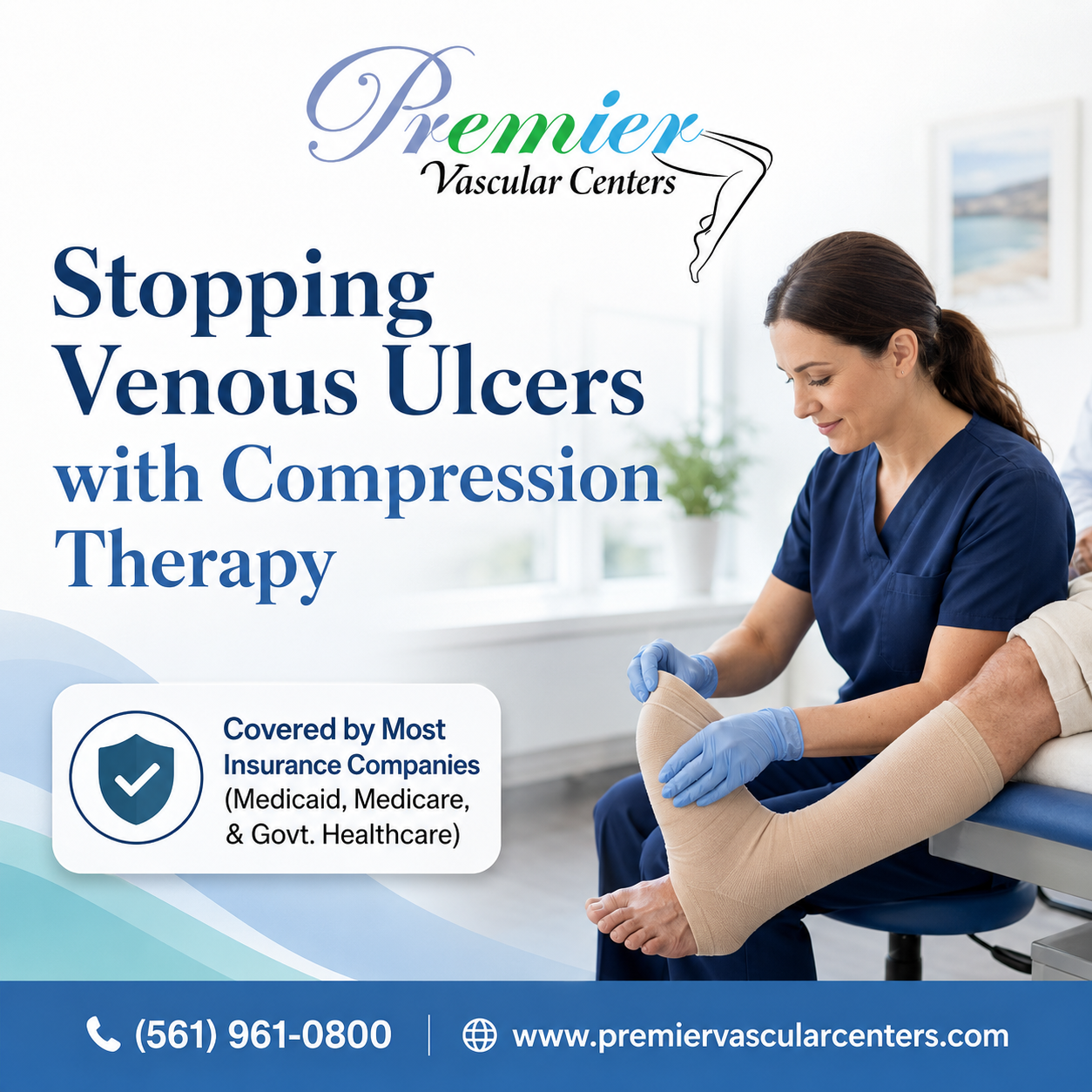
Graduated compression garments are tightest at the ankle and gradually loosen as they move up the calf. This pressure gradient physically assists your veins, pushing pooled blood back upward toward the heart instead of letting it settle and stagnate. The effect is often immediate. Swelling drops, skin pressure eases, and the tissue gets the circulation it needs to stay healthy rather than breaking down.
Pros:
- Non-invasive and easy to build into a daily routine
- Highly effective at managing everyday swelling
- Dramatically reduces the recurrence rate of ulcers in people who’ve already had one
- Inexpensive compared to other interventions
Cons:
- Requires strict, daily compliance to actually work
- Can be difficult to put on for those with arthritis or limited mobility
- Manages the symptoms of poor circulation but doesn’t fix the underlying vein that’s actually failing
That last point matters. Compression is an outstanding shield, but a shield doesn’t repair the source of the problem. For a lot of patients, that’s where clinical treatment comes in.
Discover how athletes can benefit from compression vein therapy.
Solution 2: Minimally Invasive Medical Procedures
Compression stockings carry a lot of the daily load. But for people with visibly diseased veins or a history of ulcers, pairing that habit with a clinical procedure is what protects them long-term.
Modern vein treatments have come a long way. People now have options like radiofrequency ablation or Varithena. These work by safely sealing off the specific vein that’s malfunctioning. Once that faulty vein is closed, your body reroutes blood flow through nearby healthy veins, and the pressure problem in your lower leg resolves at the source.
Pros:
- Provides a permanent anatomical fix rather than a daily workaround
- Fast, in-office procedures with minimal downtime
- Eliminates the root cause of fluid buildup instead of just managing it
Cons:
- Requires a brief clinical visit
- Requires an initial diagnostic ultrasound to map the vein before treatment
For many patients, this isn’t an either/or decision. Compression continues to play a supporting role even after a procedure, especially during recovery and for long-term maintenance.
Discover when compression therapy is a good decision and when you may ned more expert care.
Taking Control of Your Leg Health
Compression garments are a great daily habit. But they work best backed by an accurate diagnosis, not a guess.
A generic pair of compression socks is not the answer to your problem. But the truth is that these socks weren’t measured to your leg. They weren’t graded to your specific level of venous insufficiency. Compression vein therapy for legs works best as part of a plan built around your circulation profile.
Noticing persistent swelling? Skin that’s changing color? A cut taking way longer to heal than it should? Don’t wait to see what happens next. Vein specialists in Boca Raton at Premier Vascular Centers can map your veins, fit you for the right level of compression, and build a vascular health treatment plan designed to stop ulcers before they start. We also accept all major insurances, making our treatments accessible to everyone.
Schedule your evaluation today. Your legs have been asking for this.